Cybersecurity with GenAI & Agentic AI
- Hands-on labs with Claude, OpenAI & Gemini APIs - you ship code, not slideware
- AI-assisted pentesting, bug bounty hunting and red-team simulation in sandboxes
- Secure LLM, RAG and agentic systems against the OWASP LLM Top 10
- Capstone AI security audit defended before a CISO-level industry panel

Mentors come from






Why this program
Most defenders are years behind.This program closes the gap.
Purpose-built for working security and engineering professionals in Indian enterprise contexts - BFSI, IT services, manufacturing and government.
Hands-on with 25+ AI & security tools
Claude, GPT, Gemini, Burp Suite, ZAP, Nuclei, LangChain, ChromaDB, LLM Guard, MITRE ATT&CK.

6 graded builds and 1 industry capstone
A threat-intel app, a full pentest report, a secure RAG stack, a SOC triage bot - all yours to keep.

Live classes with practising red-teamers
Working offensive-security and AI-security engineers, not career trainers reading from a deck.

Portfolio, LinkedIn & interview prep
Module 6 closes with mock technical interviews and a guest panel of CISOs and hiring managers.
Recognition
Key institutional achievements

#56 in NIRF Engineering Rankings 2025
Up from 62 in 2024 and 67 in 2023

Institute of National Importance
Under the Institutes of Technology Act, Government of India

Established 2016 by the Ministry of Education
Mentored by IIT Delhi in its founding years
400-acre campus at Jagti, Jammu
Rs 1,398 crore Phase-B expansion, foundation stone laid by the Prime Minister (Sept 2025)
The toolchain
25+ Tools You'll Learn & Apply
Hands-on exposure to LLM APIs, offensive-security tooling, detection engineering, and the governance frameworks you will be audited against.


 Claude

 LlamaIndex
LLM Guard
LlamaIndex
LLM Guard
 Python
 Jupyter
 FastAPI
 ChromaDB
 Pinecone
 GitHub
Burp Suite
OWASP ZAP
Nuclei
MITRE ATT&CK
OWASP LLM Top 10
STRIDE
Splunk SPL
YARA
Sigma
KQL
VirusTotal
NIST AI RMF
GitHub
Burp Suite
OWASP ZAP
Nuclei
MITRE ATT&CK
OWASP LLM Top 10
STRIDE
Splunk SPL
YARA
Sigma
KQL
VirusTotal
NIST AI RMF
*Some of the tools listed above may be replaced with newer or updated tools as the threat landscape and tooling evolve. Such decisions are made at the sole discretion of the Institute.
Who this is for
Twelve roles this was built for.Find yours before you apply.
Entry bar is 3+ years in IT, cybersecurity, engineering or a tech-adjacent role. You do not need to be writing production code today.

SOC analysts & threat hunters
Cut alert triage time with LLM-assisted log analysis.

Penetration testers & red teamers
Add AI-assisted recon and exploit development to your kit.

Application security engineers
Secure LLM features before they ship to production.

Cloud & DevOps engineers
Put AI security checks inside your CI/CD pipeline.

Network & infrastructure admins
Move from keeping systems up to defending them.

Security architects
Design the AI security reference architecture your org lacks.

GRC & compliance leads
Map AI risk to DPDP, CERT-In, RBI and NIST AI RMF.

Software engineers moving into security
Your code background is the advantage here, not a gap.

Data & ML engineers
Lock down RAG pipelines, vector stores and training data.

CISOs & security managers
Build the AI governance case your board keeps asking for.

Bug bounty hunters
Hunt novel AI-specific bugs, not duplicates already reported.

Consultants & auditors
Sell AI security audits with a defensible methodology.
Curriculum · 6 months
Six modules, one capstone, zero filler
What you'll learn
- How LLMs actually work - tokens, context windows, embeddings, inference and RAG, framed for security professionals
- The AI threat landscape: AI-powered phishing, deepfakes, synthetic identities, prompt injection, AI-assisted malware
- Mapping AI-enabled attacks with MITRE ATT&CK, the Cyber Kill Chain and the OWASP Top 10 for LLM Applications
- India's regulatory landscape - DPDP Act 2023, CERT-In Directions, RBI and SEBI expectations for AI systems
- Prompt engineering for threat intelligence, incident analysis and security investigations
Module goal
Ship a Python app that takes an industry sector, calls an LLM API and returns a structured executive threat summary - plus a 1,500-word sector assessment mapped to ATT&CK.
Tools in this module




 MITRE ATT&CK
Key takeaway
You leave able to explain, to a board, exactly how GenAI changes your organisation's attack surface - and which Indian regulations bite.
What you'll learn
- How attackers use LLMs for hyper-personalised phishing, vishing and smishing at scale
- Detecting AI-generated social engineering versus human-written attacks
- AI-assisted vulnerability assessment - CVE analysis, remediation prioritisation, reporting
- Security architecture of LLM applications: models, prompts, data sources, APIs, tools, agents
- Jailbreaks, data poisoning, model extraction, and the defences that actually hold
- Red, blue and purple team approaches in an AI-enabled environment
Deliverable · 15%
A complete pentest of a sandboxed web application using AI at every stage - planning, execution and reporting - structured as a real client deliverable, plus a critical reflection on where AI helped and where it fell short.
What you'll learn
- Building an AI-assisted reconnaissance pipeline that discovers and prioritises assets
- Using LLMs to find authentication, authorisation, business logic and race condition flaws
- Chaining multiple low-risk issues into high-impact attack paths
- Advanced prompt injection, multi-turn jailbreaks, RAG exploitation and agentic tool abuse
- Recognising AI hallucination during vulnerability research, and validating around it
- Responsible disclosure, the CVE process and professional vulnerability reporting
Deliverable · 15%
An end-to-end AI-assisted vulnerability research engagement against an instructor-approved training environment, from reconnaissance through to a written disclosure report.
What you'll learn
- Threat modelling AI applications with STRIDE and the OWASP LLM Top 10
- Secure prompt design, input validation, output filtering and guardrail implementation
- Secure RAG: document ingestion, vector database security, encryption, tenant isolation
- Secure AI agents - tool permissions, least privilege, approval gates, audit logging, MCP integrations
- AI supply chain security, model provenance and automated scanning in CI/CD
- NIST AI RMF and ISO/IEC 42001 applied to a real deployment
Deliverable · 15%
Design, build and secure a production-ready GenAI application - chatbot, RAG app, agent or security assistant - with a repository, architecture and threat model, security test results, deployment guide and an executive design summary.
What you'll learn
- Using LLMs to summarise, classify and analyse security logs, alerts and IOCs at scale
- Generating and improving detection logic - KQL, Sigma rules, Splunk SPL and YARA
- Building a SOC investigation assistant on your own playbooks and documentation using RAG
- Threat intelligence: IOC extraction, threat actor profiling, ATT&CK mapping, STIX/TAXII concepts
- AI across the incident response lifecycle, and where analyst validation is non-negotiable
- SOAR workflows and human-in-the-loop automation
Deliverable · 12%
A working AI-assisted SOC triage tool that ingests SIEM alerts, classifies severity, extracts IOCs, recommends response actions and produces both an analyst summary and an executive briefing - plus 500 words on its limits.
What you'll learn
- Building enterprise AI security architectures across BFSI, healthcare, manufacturing, government and SaaS
- NIST AI RMF, ISO/IEC 42001, the EU AI Act and India's evolving AI regulation
- Responsible AI, privacy, bias and AI incident management
- Running an enterprise AI governance assessment and building a prioritised roadmap
- Technical writing, vulnerability reporting and executive communication
- Mock technical interviews and a guest panel with CISOs, AI security engineers and hiring managers
Deliverable · 5%
An AI ethics and risk case study analysing a real-world AI security incident - the ethical dimensions, compliance failures and risk breakdowns - and a revised governance framework that would have prevented it. 1,000 words.
What you'll do
- Scope an audit on your own employer, a provided mock organisation, or a partner from the programme network
- Threat model the organisation's AI attack surface and test key systems against the OWASP LLM Top 10
- Audit compliance against the DPDP Act, CERT-In guidelines and NIST AI RMF
- Build a risk register with severity ratings, evidence and business impact
- Produce a 30 / 90 / 180-day remediation roadmap with cost-benefit framing
- Present for 15 minutes and defend it in a 10-minute viva before IIT Jammu faculty and two industry practitioners
Deliverable · 30%
A 15–25 page audit report formatted as a professional client deliverable, a one-page executive summary for a board, a visual remediation roadmap, and a live presentation with viva.
Faculty
Taught by people whobreak systems for a living
Offensive-security practitioners and AI-security engineers, with IIT Jammu programme directors leading the academic rigour.





What you'll build
Six things you keep. All of them shippable.
 01
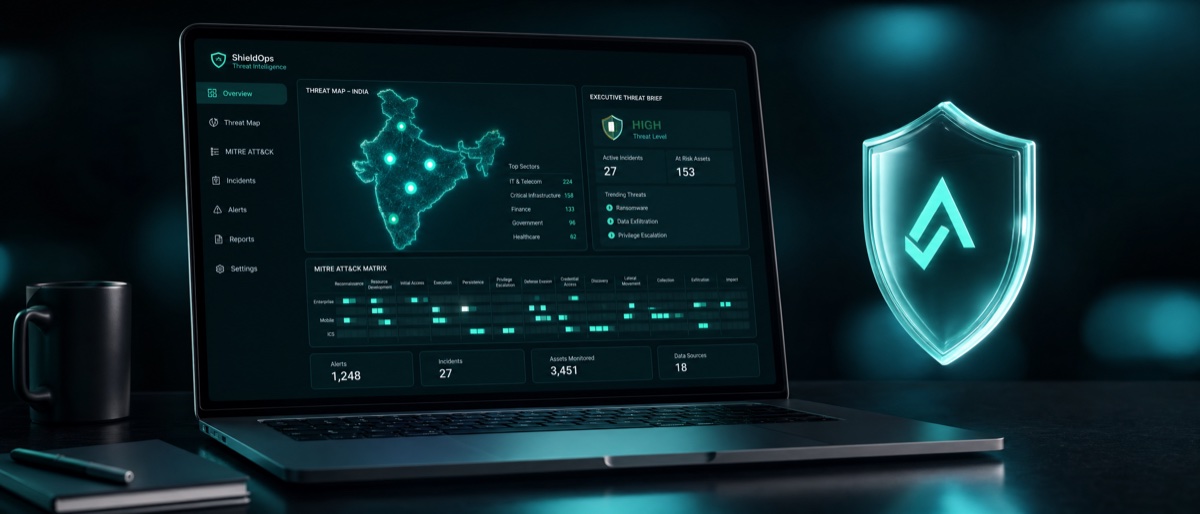
01Sector threat-landscape analyser
Python app that takes an Indian industry sector, calls an LLM API and returns an ATT&CK-mapped executive threat brief.
 02
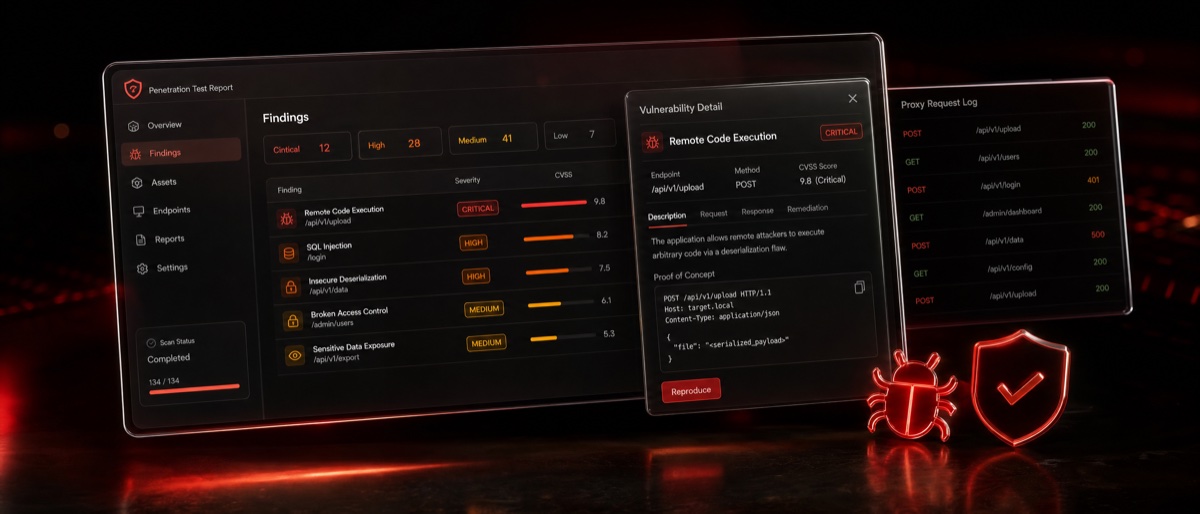
02AI-assisted penetration test report
A full client-grade pentest of a sandboxed web app - LLM-planned, LLM-assisted, with a critique of where AI fell short.
 03
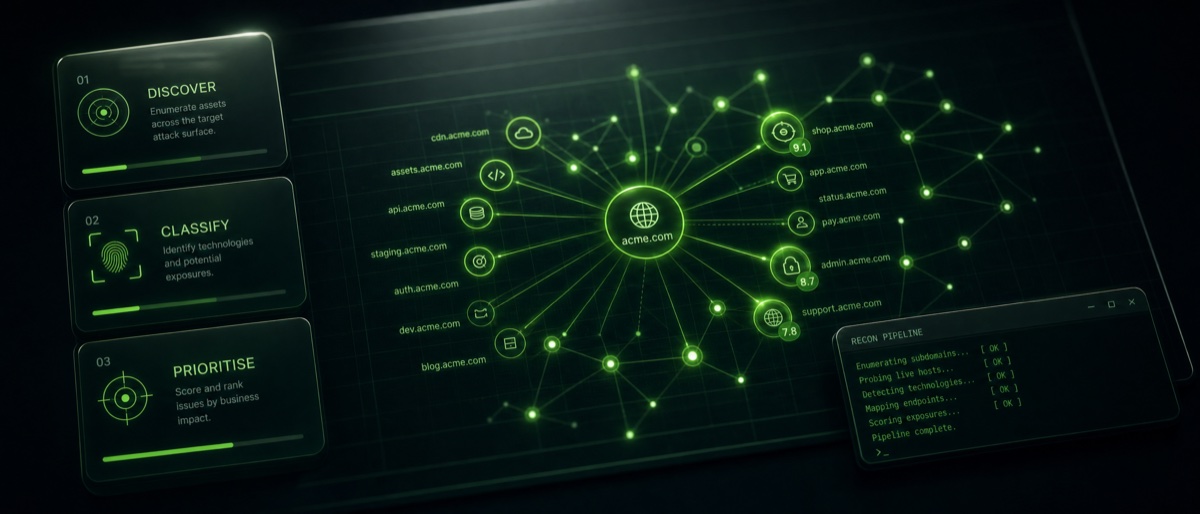
03AI reconnaissance pipeline
Discovers, classifies and prioritises assets across a bug bounty scope, then triages the attack surface automatically.
 04
04Secure RAG application
A production-style RAG stack with role-based document access, PII filtering, tenant isolation and monitoring.
 05
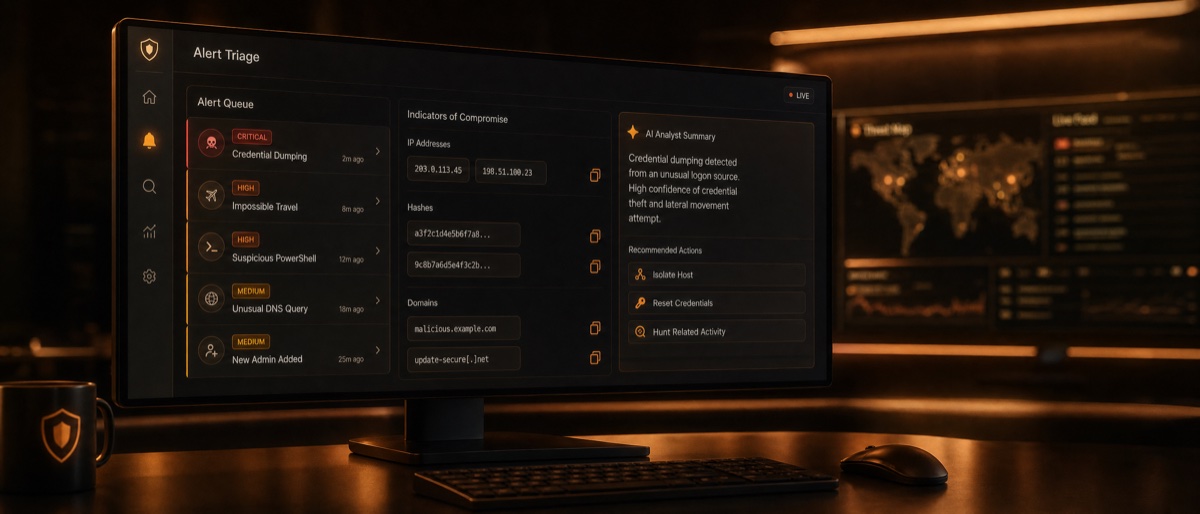
05SOC triage bot
Ingests SIEM alerts, classifies severity, extracts IOCs and writes both an analyst summary and an executive briefing.
 06
06Secure agentic workflow
An AI agent calling external tools behind authorisation, approval gates and full audit logging.
Weeks 23–24 · 30% of your grade
Capstone ✦ audit
Run a structured AI security audit for a real or mock organisation, then defend it in a live viva before IIT Jammu faculty and two industry practitioners at CISO or Security Director level.
The credential
A PG Certificate from IIT Jammu.Not a completion badge.
Issued by I3C at IIT Jammu on completion of all six modules and the capstone viva.
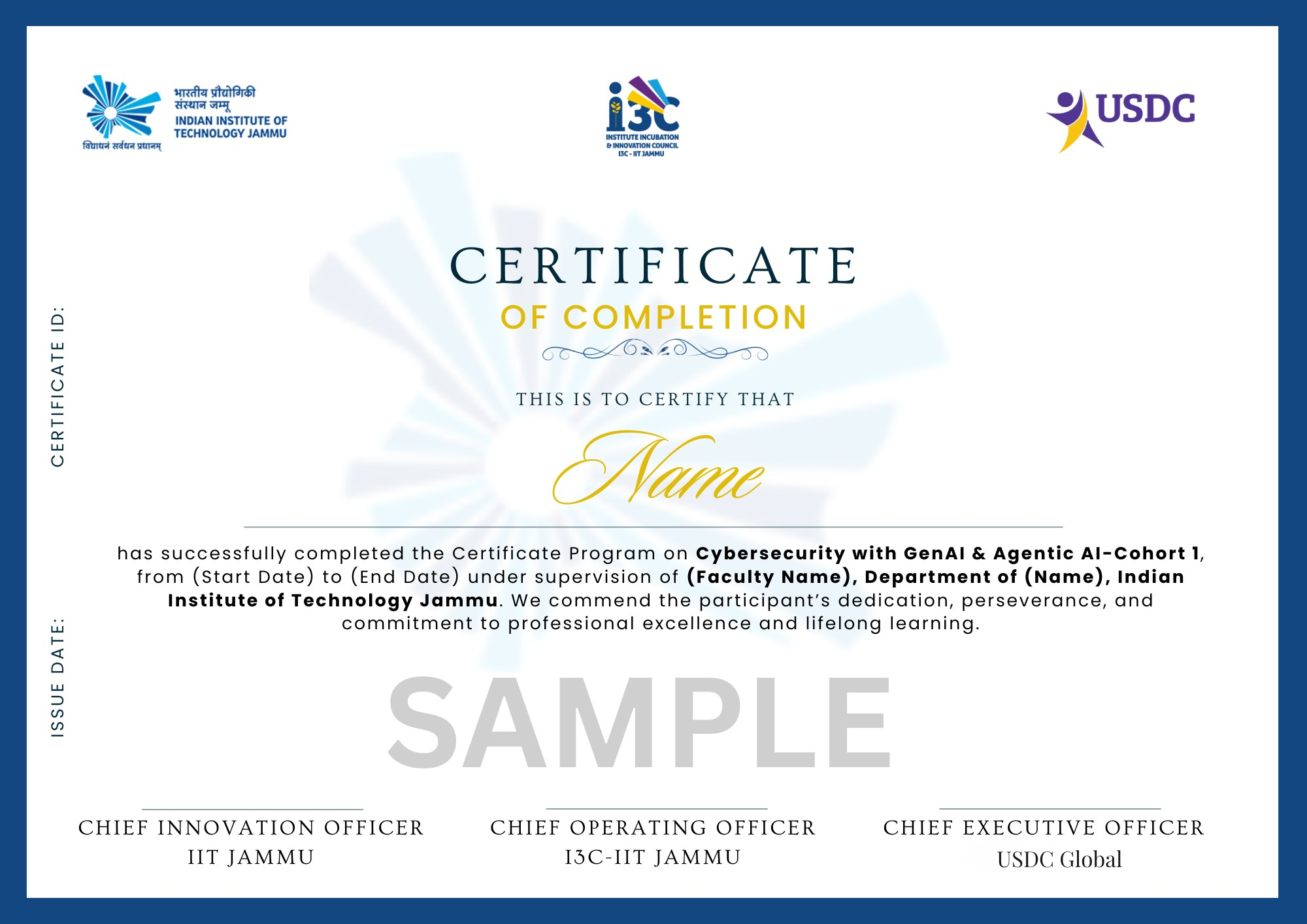 Sample specimen
Issued by the institute, not the partner
The certificate carries IIT Jammu's name and I3C's authority. USDC Global delivers the programme; it does not award the credential.
Earned on assessed work
Six module assignments, two live assessments and a defended capstone. Attendance alone does not qualify you.
Shareable and verifiable
Add it to LinkedIn with a verification link. Module 6 walks you through positioning it for AI security roles.
Program fee
One fee. Everything included.
No hidden lab charges, no separate certification fee, no upsell at the end of the programme.
What the fee covers
- 110 live hours plus recorded access to every session
- All sandbox lab environments and datasets
- Assignment review, capstone mentoring and the industry viva
- The IIT Jammu PG Certificate on successful completion
Batch 1 pricing. Admission is by profile review - you only pay once an advisor confirms you fit.
- 6 months, weekend-only scheduling
- 130 total hours - 110 live + 20 project
- 6 modules, 6 graded builds, 1 capstone
- Certificate issued by I3C, IIT Jammu
- Optional 2–3 day campus immersion
- Career support and the CISO hiring panel
How to enrol
Four steps, about a week.No entrance exam.
Admission is by profile review, not a test. If your background does not fit, an advisor will tell you before you pay anything.
Submit the form
Name, work email, years of experience and what you want out of the programme. No documents yet.
Profile review
We check the 3+ years requirement and whether the labs will land for your role. You hear back either way.
Advisor call
Weekly time commitment, how the labs run, fee options and the employer reimbursement pack.
Confirm your seat
Pay in full or start a no-cost EMI. Onboarding, cohort access and pre-reads follow within 48 hours.
Come to Jammu once.Meet the people you learn with.
The programme runs live online. The campus immersion is an optional add-on for those who want lab time in the room and a face behind every name.
FAQs
The questionswe get asked most.
Anything not covered here, an advisor will answer on the call before you commit.
Six months, weekend-only. Six taught modules across weeks 1 to 22, then a capstone in weeks 23 and 24. Sessions run one to two times a week at 2.5 hours each, totalling 110 live hours, plus roughly 20 hours of project work. All sessions are recorded.
You need to be comfortable reading and modifying Python. You do not need to be a professional developer. Labs give you working scaffolds rather than a blank file, and Module 1 covers the LLM API patterns everything else builds on. If your background is infrastructure, GRC or management, tell an advisor on the call and they will be straight with you about the lift.
Budget five to seven hours. That is one to two live sessions of 2.5 hours on the weekend, plus two to four hours on labs and the module assignment. Assignment weeks are heavier, and the capstone in weeks 23 to 24 needs about 20 hours in total.
Yes. Every offensive exercise runs in an authorised sandbox - intentionally vulnerable applications, instructor-provided research labs, and public bug bounty training environments. You are never pointed at a live third-party target. Responsible disclosure and the CVE process are taught explicitly in Module 3.
Three or more years in IT, cybersecurity, engineering or a tech-adjacent role. There is no entrance exam. Admission is by profile review, and an advisor will tell you if the programme is not a fit before you pay anything.
A Post Graduate Certificate in Cybersecurity with GenAI & Agentic AI, issued by I3C at IIT Jammu, with USDC Global named as the delivery partner. It is awarded on completion of all six module assignments, two live assessments and the capstone viva - attendance alone does not qualify you.
No. It is an optional two to three day add-on at the IIT Jammu campus and is not required for the certificate. Travel and accommodation are at your own cost.
Usually, yes. Ask an advisor for the L&D justification pack - it covers programme outcomes, the hour breakdown, and a GST invoice raised in your employer's name. No-cost EMI is also available if you are paying yourself.